
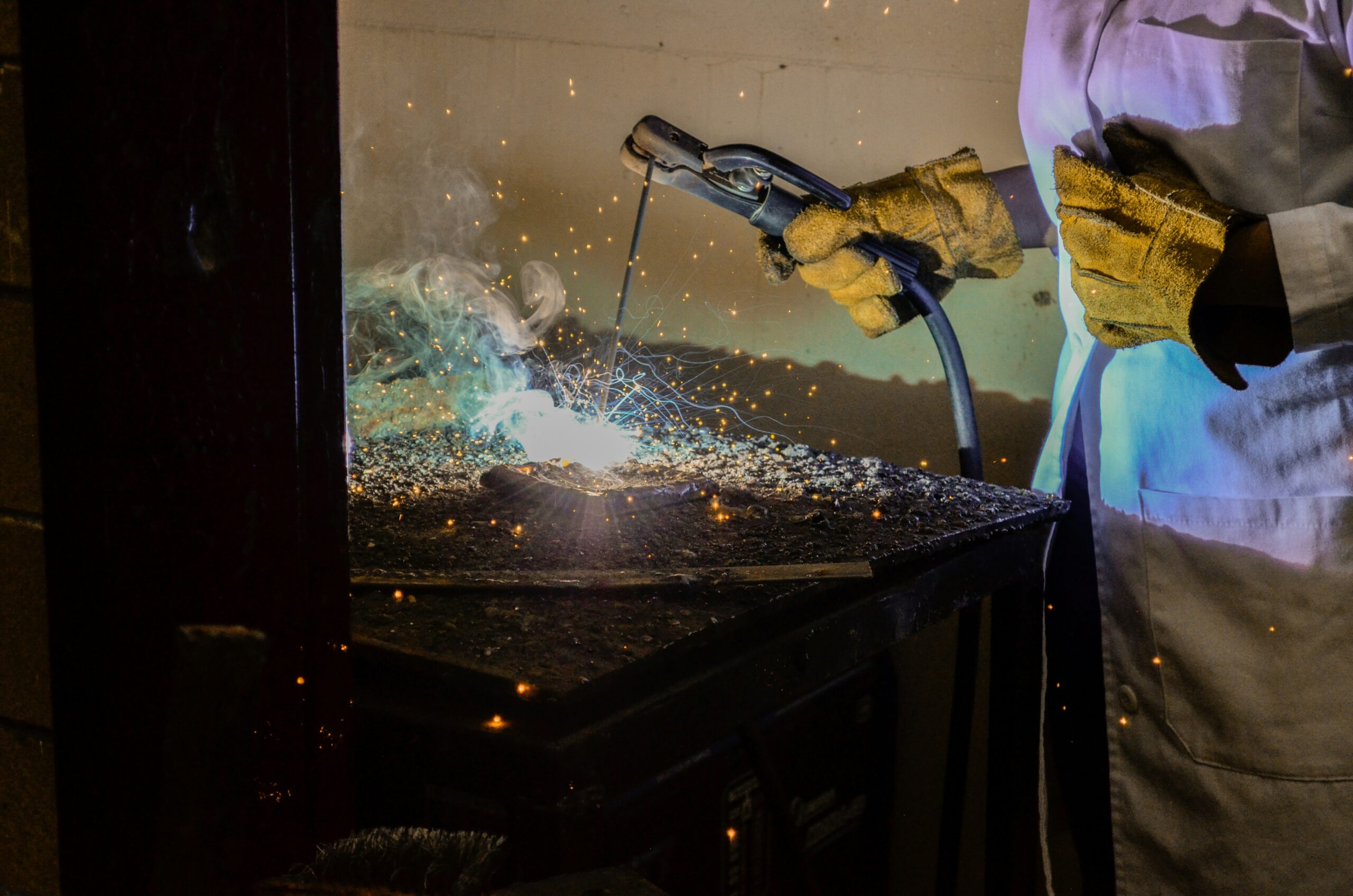
Field work is where industrial projects either stay on track or start to slip. You can have excellent drawings, a well run fabrication shop, and a solid plan, but once piping and equipment hit the site, real world conditions take over. Access limitations, changing tie in points, weather, other trades, and commissioning deadlines all collide at the exact moment weld quality matters most.
That is why Field Welding Services are not just “extra labor” added at the end of a project. They are a disciplined, code aligned scope that protects mechanical integrity, supports safe startup, and keeps construction moving when the schedule is tight.
At AI Energy Solutions, our Field Welding Services are built around the same principles we apply to fabrication: qualified procedures, qualified personnel, documented inspection, and practical execution that respects safety and uptime. This blog breaks down what field welding really includes, why it is critical, and what to look for in a field welding partner.
What are Field Welding Services?
Field Welding Services refer to welding work performed at the job site rather than in a controlled fabrication facility. This can include new construction, turnarounds, retrofits, repairs, and system expansions. Typical field welding scope includes:
- Fit up and welding of pipe to pipe connections, including tie ins
- Weld out of prefabricated spools to installed equipment
- Modifications to existing piping to accommodate design changes
- Supports, structural attachments, and steel modifications tied to piping systems
- Hot work for repairs during outages and maintenance windows
- Coordination with inspection, testing, and commissioning teams
In practice, field welding is often the final step before a system can be pressure tested, flushed, or placed into service. That makes the quality and documentation of each weld a direct contributor to startup readiness.
Why Field Welding Services Matter More Than Ever
Industrial facilities are under pressure to build faster, restart quicker, and operate with fewer unplanned disruptions. That reality increases the value of reliable Field Welding Services in several ways.
Field welding protects the critical path
Tie ins and weld outs are often on the critical path because downstream work cannot proceed until the system is mechanically complete. A field welding crew that is organized, qualified, and inspection ready helps prevent stop and start progress.
Quality in the field affects lifetime performance
A piping system does not care whether a weld was made in a shop or in a trench at midnight. The weld must meet code requirements, tolerate service conditions, and remain leak free over time. Field welding must match the same standard you would demand in a controlled facility.
Documentation is not optional anymore
Owners and EPC teams increasingly require traceability, weld maps, welder continuity, inspection reports, and turnover packages that support QA requirements and long term maintenance strategies. Field welds need the same record keeping discipline as shop welds.
Safety First: Hot Work Done the Right Way
Field welding introduces hazards that must be managed carefully: fumes, UV exposure, burns, fire risk, confined spaces, and interactions with other trades. OSHA’s guidance and standards for welding, cutting, and brazing emphasize the importance of controlling these hazards with proper practices, PPE, ventilation, and safe work procedures.
A professional field welding approach includes:
- Hot work permitting aligned with the site’s EHS program
- Fire prevention measures, including fire watches and area preparation
- Ventilation planning for enclosed spaces and interior work
- PPE compliance for eyes, face, hands, and respiratory exposure as needed
- Pre task planning that accounts for other trades and live facility constraints
Strong Field Welding Services are not just about laying a bead. They are about executing hot work safely, repeatably, and with minimal disruption to the surrounding site activities.
Code Compliance and Qualification: The Backbone of Field Welding
A field weld is only as strong as the system behind it. That system begins with qualified procedures and qualified welders.
Welding procedure and welder qualification
Many industrial piping and pressure related scopes require formal qualification for welding procedures and personnel. ASME BPVC Section IX is a widely used framework for qualification rules related to welding and brazing, and it is commonly referenced across pressure equipment and piping work.
In practical terms, a field welding provider should be able to demonstrate:
- Welding Procedure Specifications (WPS) appropriate for the materials and joint types
- Supporting qualification records where required by the governing code and project specs
- Welder qualifications that match the process, position, and material group
- Continuity tracking and documentation aligned with project QA expectations
When these elements are in place, field welding becomes predictable. When they are missing, quality becomes inconsistent and inspection becomes a battle.
Fit Up, Access, and the Reality of Site Conditions
Shop welding benefits from positioners, stable platforms, controlled lighting, and consistent environmental conditions. Field welding rarely has those advantages.
That is why experienced Field Welding Services focus heavily on fit up quality and work planning:
- Verifying alignment, root gap, and joint prep before striking an arc
- Planning weld sequence to reduce distortion and support dimensional control
- Managing access constraints with proper scaffolding and safe work platforms
- Coordinating with piping installation crews so spools land correctly the first time
Fit up discipline is one of the biggest separators between “field welding that passes” and “field welding that keeps failing inspection.”
Materials, Processes, and Heat Control in the Field
Field welding often involves a mix of materials and service conditions. Carbon steel, stainless alloys, chrome moly, and specialty materials each introduce different requirements for preheat, interpass temperature control, filler selection, and post weld needs.
High quality Field Welding Services treat temperature control as a production requirement, not a suggestion. That includes:
- Following specified preheat and interpass ranges
- Using controlled consumables and proper storage practices on site
- Managing wind, moisture, and ambient temperature impacts on weld integrity
- Coordinating post weld heat treatment requirements when applicable, including planning for access and timing
Field welding has less margin for error because rework is expensive and schedule disruptive. Process control matters.
Inspection and Testing: Making Field Welding Inspection Ready
Field welding is inseparable from inspection. If a crew is not inspection ready, the project will slow down fast.
A disciplined Field Welding Services scope integrates:
- Visual inspection steps during fit up and after welding
- Coordination with NDE methods such as PT, MT, UT, or RT as specified by project requirements
- Punch list management, including timely repair welding and re inspection sequencing
- Hydrotest or pneumatic test preparation support when required, including fixing leaks efficiently and documenting repairs
The goal is not just passing NDE. The goal is reducing the number of surprises that appear at test time.
Documentation and Turnover: The Part That Protects Owners
AI Energy Solutions approaches Field Welding Services with documentation in mind from day one, including:
- Weld logs and weld maps tied to isometrics
- Welder identification and continuity records
- Inspection and NDE reports organized for turnover
- Repair documentation when applicable, including clear references to original weld IDs
- Closeout support that helps the project team hand off the system confidently
Documentation is how a good welding job stays valuable long after the crew leaves the site.
Where AI Energy Solutions Adds Value with Field Welding Services
Field work is most successful when it is integrated with fabrication, planning, and project execution, not treated as a last minute scramble.
AI Energy Solutions supports customers by aligning Field Welding Services with:
- Prefabrication strategy to reduce field weld volume where possible
- Sequencing and coordination with installation teams to avoid rework
- Quality systems that mirror shop expectations in a site environment
- Safety planning consistent with industrial hot work requirements
- Inspection coordination so welds move through QA without delays
Whether the scope is new construction weld outs, turnarounds with short windows, or modifications to support changing process needs, the objective is the same: deliver field welds that support reliable operations and predictable startup.
What to Look for in a Field Welding Partner
If you are selecting a provider for Field Welding Services, prioritize capability that reduces risk, not just headcount.
Look for:
- Demonstrated code alignment and qualification discipline
- Clear safety processes aligned with welding hazard controls
- Proven inspection readiness, including NDE coordination
- Documentation systems that support owner turnover expectations
- Practical field experience that anticipates access, sequencing, and schedule constraints
Field Welding Services That Support Startup, Not Setbacks
Field welding is one of the last hands on steps before a system becomes operational. That means it carries outsized influence on safety, quality, and schedule. When Field Welding Services are executed with qualified procedures, disciplined fit up, strong safety controls, and inspection ready documentation, projects move faster and owners gain confidence in long term performance.
AI Energy Solutions delivers Field Welding Services to help industrial projects reach mechanical completion, pass inspection, and achieve startup with fewer surprises, fewer delays, and stronger outcomes.